History Story:
Charlie Ray Builds an Island
by Malcolm Ray
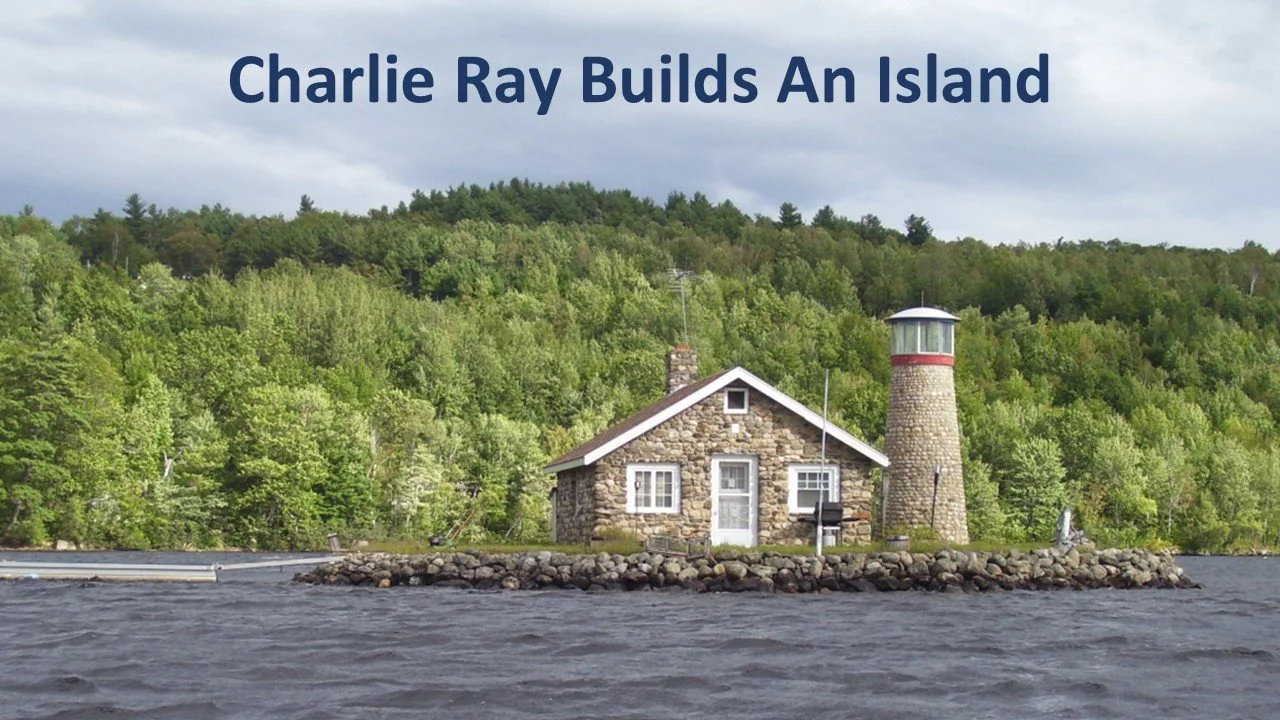
The island in Lake Asanagunticook is an icon of the Town of Canton.
• Logo used by the town.
• All over town website.
• Masthead of many Canton Criers
• Numerous newspaper and magazine articles.
So, who built it? When was it built? How did they do it?
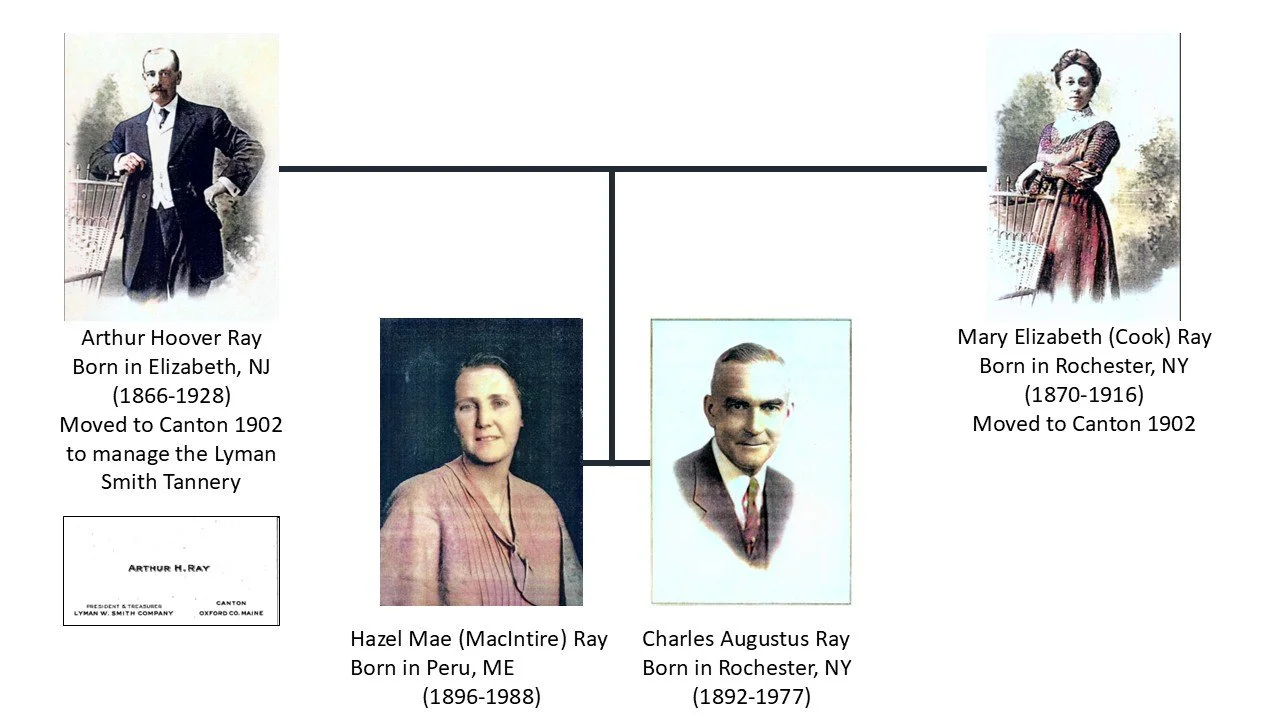
Charlie Ray was the one responsible for building the island. He was the son of Arthur Ray and Mary Elizabeth (Cook) Ray.
Arthur Ray came to Canton in 1902 to run the tannery for the Lyman Smith Company. He was born in Elizabeth NJ in 1866 and had managed several other tanneries – one in Rochester NY and another in Norwood MA -- before coming to Canton to run the Lyman Smith Tannery. His wife was Mary Elizabeth Cook Ray who was born in 1879 in Rochester NY. They were accompanied by two of their sons Walter and Charlie. A third child – Harvey – died as an infant in Rochester. Walter died of phumonia while a teenage in Canton so only Charlie survived. Charlie grew up in Canton having moved here at 10 years old. He loved the lake and spent days exploring in his birch bark canone. He married a local Peru girl, Hazel (MacIntire) Ray in 1915. They had five children that survived to adulthood – three sons (Conrad, Robert and Ronald) and two daughters (Mary and Margaret).
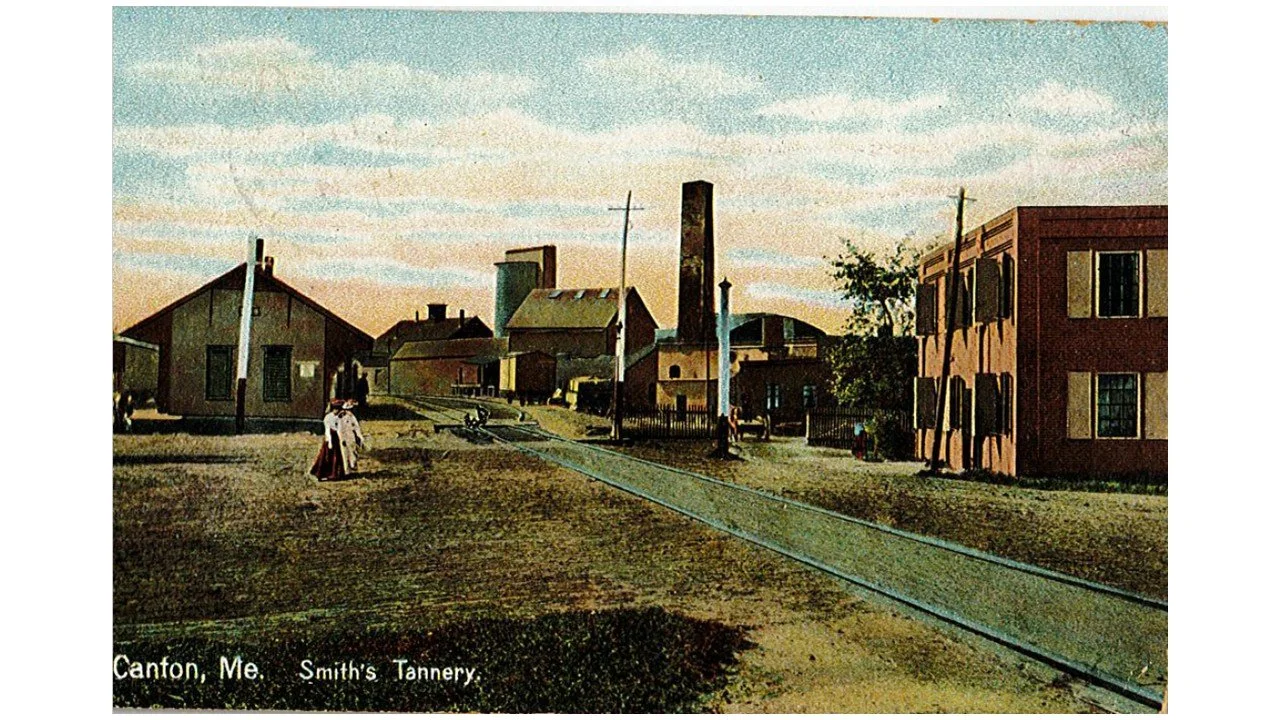
Charlie took over running the tannery for Arthur around 1920. The Tannery played a big role -- It controlled the lake level and also provided some large trucks for dragging boulders out on the ice.
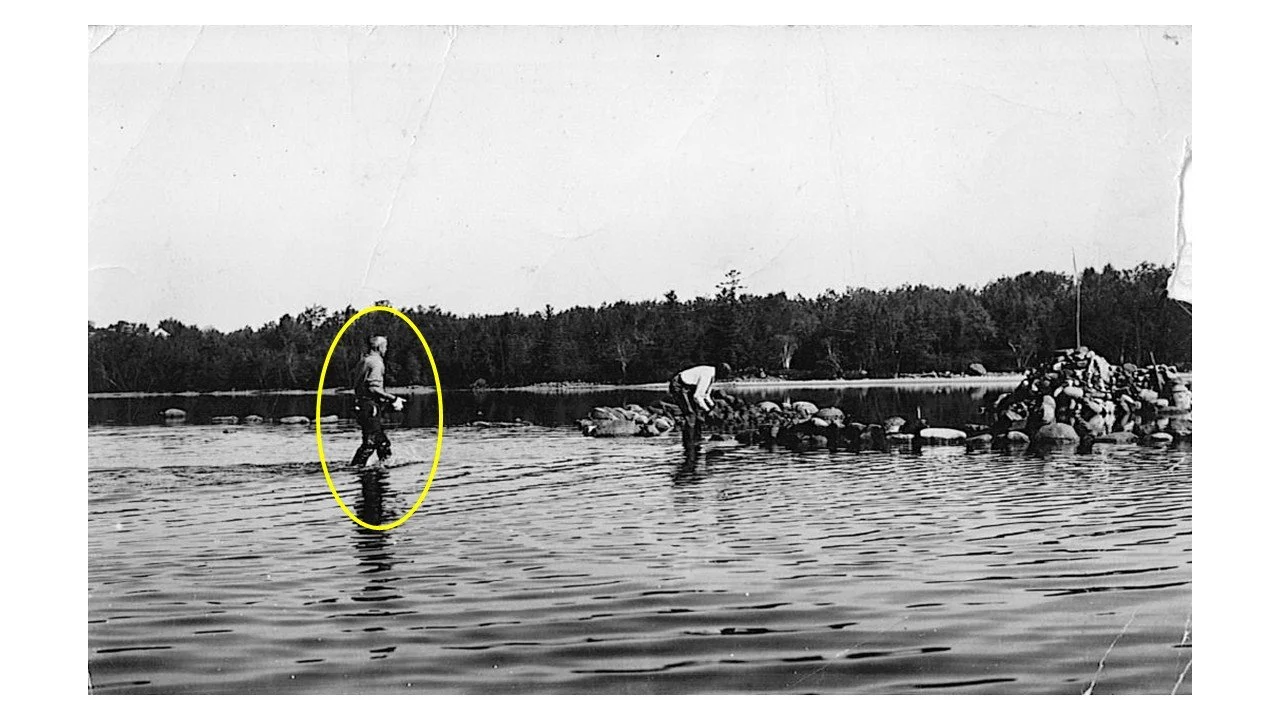
The island sits on a glacial moraine that is roughly parallel to the north shore of the lake. On the north side of the moraine the lake is 15 ft deep (when the dam is full) and 4 ft deep on the south side. When the dam is open (as it is here) the shallow side is only about 1 ft deep. Notice the rock to the left – they are still there and mark the edge of the moraine.
Recently there were piles of stones off the Roadshore Beach made by local kids to make little islands. Apparently kids were doing the same thing 100 years ago. The story goes that when Charlie was a boy, Canton kids would swim out to a boulder pile located on this moraine. They made a pool “for the girls” by stacking ring of rocks. Hazel – his wife – says that is bunk! Girls of her generation did not swim! That youthful experience planted the seed in Charlies’s mind that it would be a great place for an island.
In 1934 at the age of 42, in the middle of the Great Depression, he decided to make good on his childhood plan. I believe this is Charlie. I don’t know who the other man is.
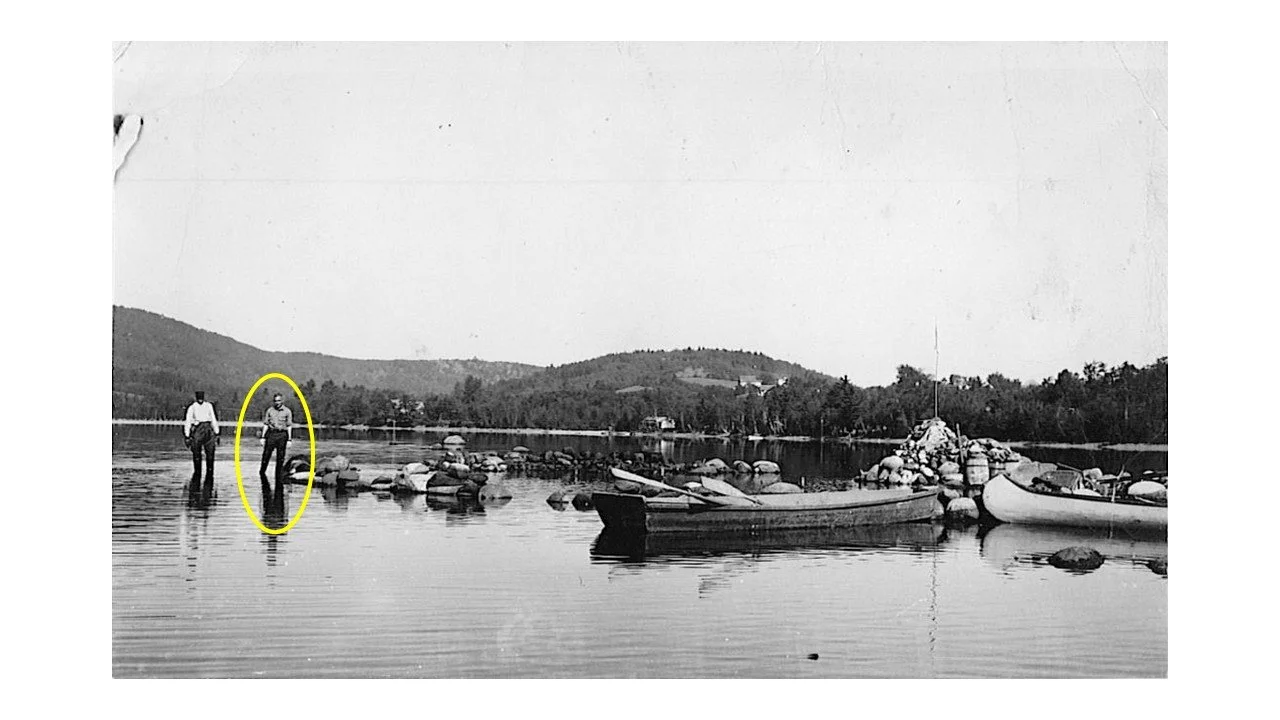
In the winter of 1934/35 and maybe 35/46 he used trucks from the tannery to drag very large boulders out onto the ice and set them in a circle 55-ft in diameter. When the ice went out, he had the foundation for the island. When the ice went out the boulders sank into position. This picture would have been taken in the summer of 1934 since there are no boulders yet. Here is Charlie again.
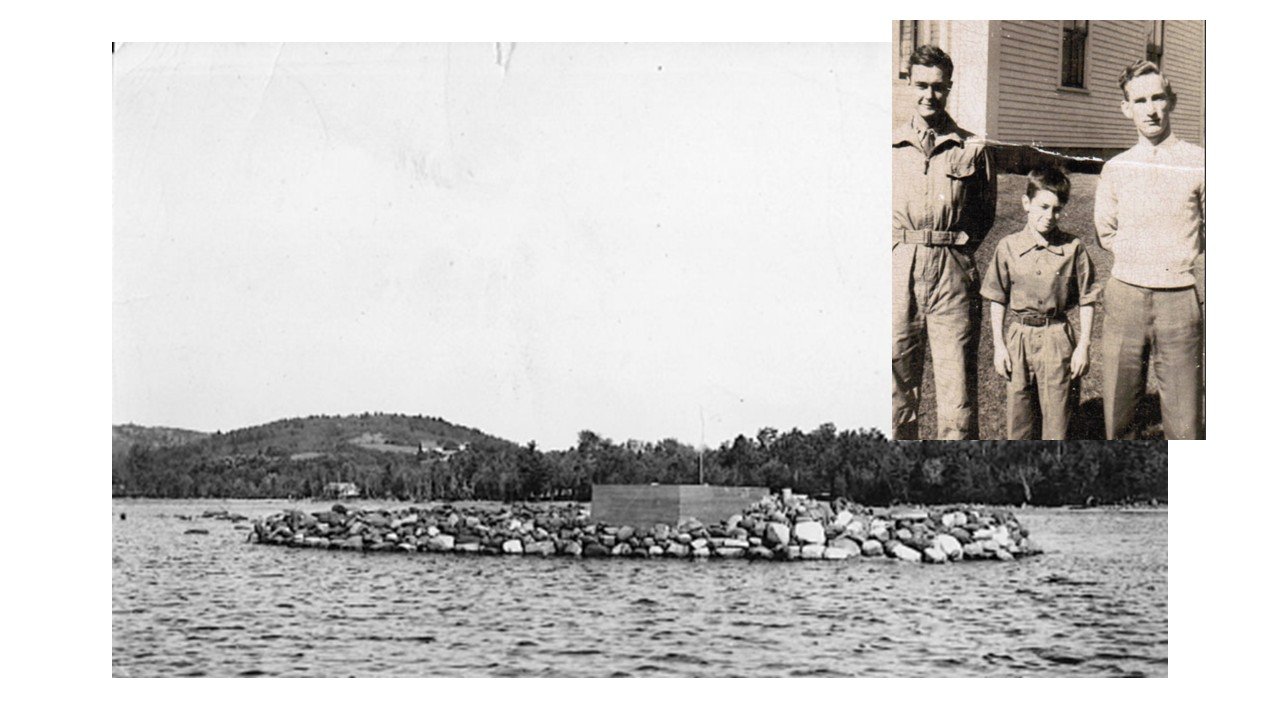
He used a little under 500 cubic yards of rock to build the base – that is about 50 large dump truck loads and (except for what was hauled out on the ice) everything was done by hand. He bought old farm stone walls on Thorne Mnt and towed load after load out with a home-made skow or barge. Many town folk volunteered a few nights and weekends to help out. Family and friends were all impressed as labor!
Here are the three Ray boys - Conrad would have been about 18 when construction started so he probably worked on the island when he was not at college. Ronnie – my father – was only two years old when construction started and 6 when it was complete, so he probably mostly got in the way. Robert was 8 when it started and 13 at the end so he probably bore the brunt of force family labor. I believe the girls – Mary and Margaret – were exempted from building duties.
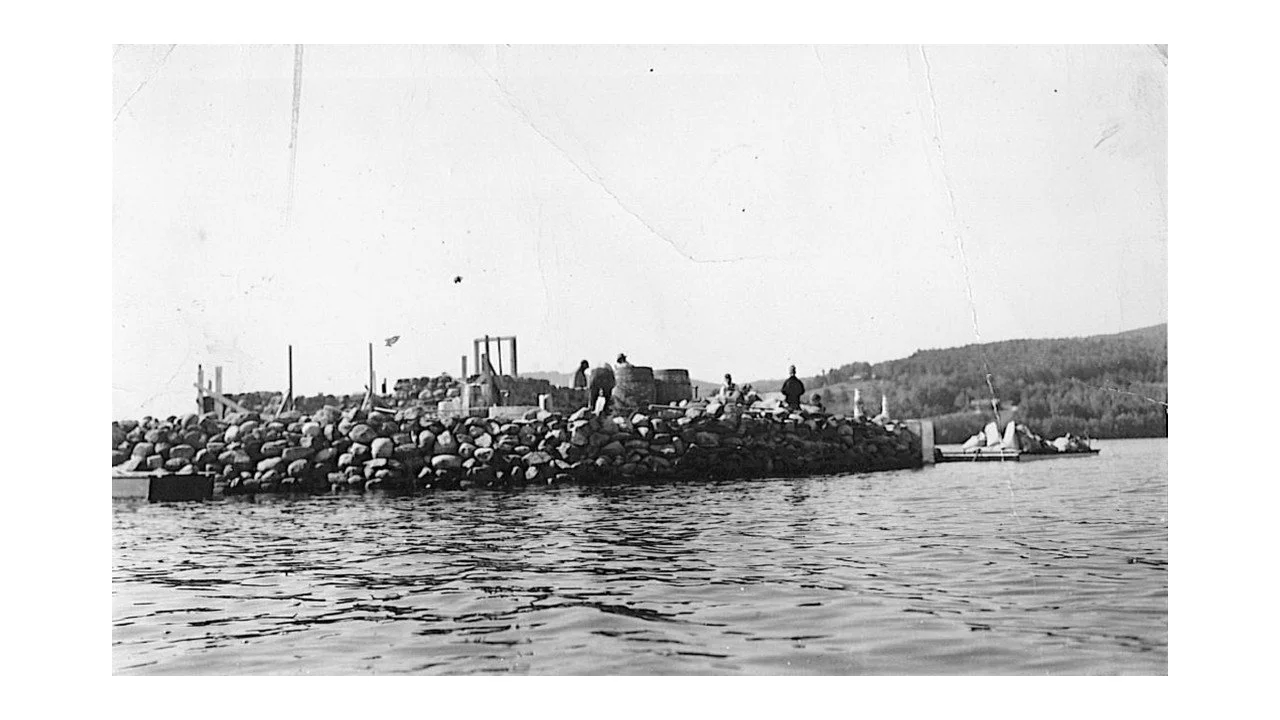
The island base was completed in 1936. Construction of the cabin took place in 1937. At the right side of the island is one of Charlie’s home-made skows or barges used for hauling rock. Unlike the stone for the base which came from shore stones and rock walls, the stones for the cabin were carefully selected rounded glacial stones collected from a local gravel pit.
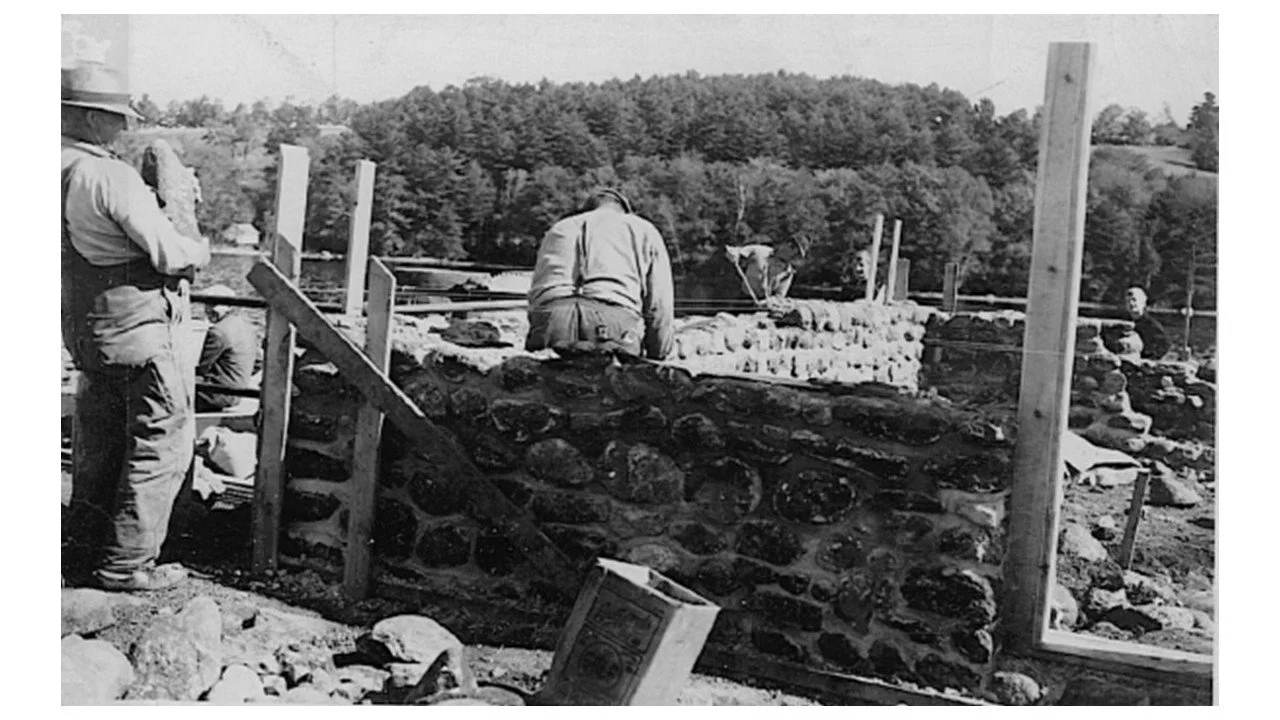
Local stone masons the Hodge brothers did much of the stonework on the cabin. They were paid 35 cents and hour which was a typical labor rate in the depression. The cabin would be 20 ft by 24 ft and have 16-inch-thick walls. The joints were smoothed using soup spoons. I suspect soup spoons were in short supply in Hazel’s kitchen in these years.
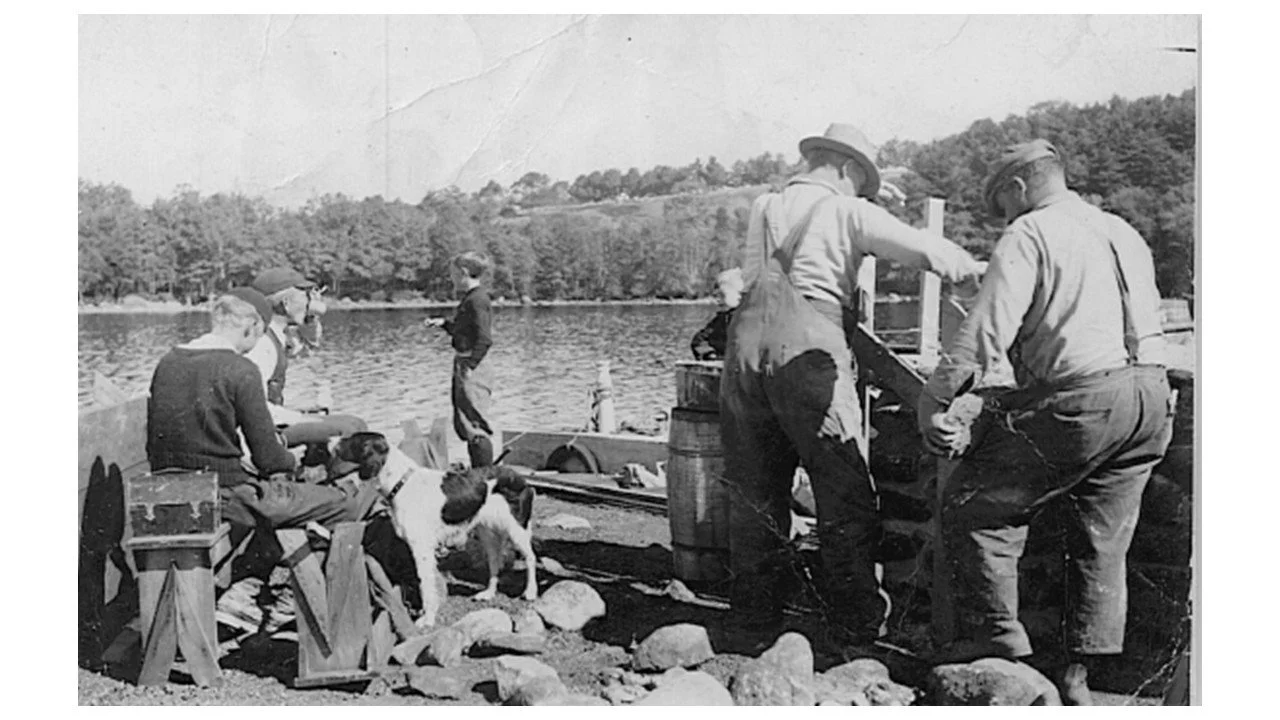
It looks like some of the crew is having a lunch break. The boy in the dark shirt is either is probably Robert who would have been 11. The boy just to the right of the mason with his back to the camera is probably Ronnie who would have been 6. Notice the slip built to moor a boat just behind Robert. It quickly became a maintenance headache due to damage from the ice and was filled in within a few years.
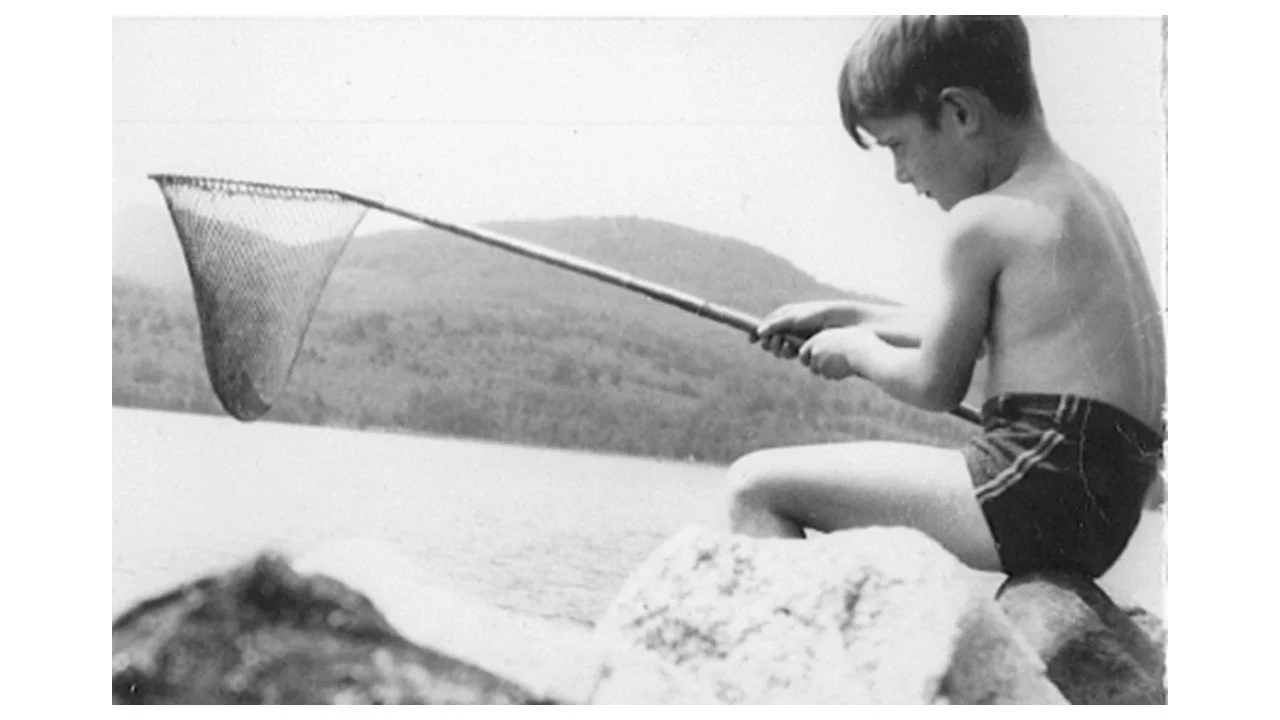
My Dad – Ron Ray – doing his part. He would be about 6 years old here in 1938. Catching sunfish in nets was always a favorite activity for Ray kids at the island.
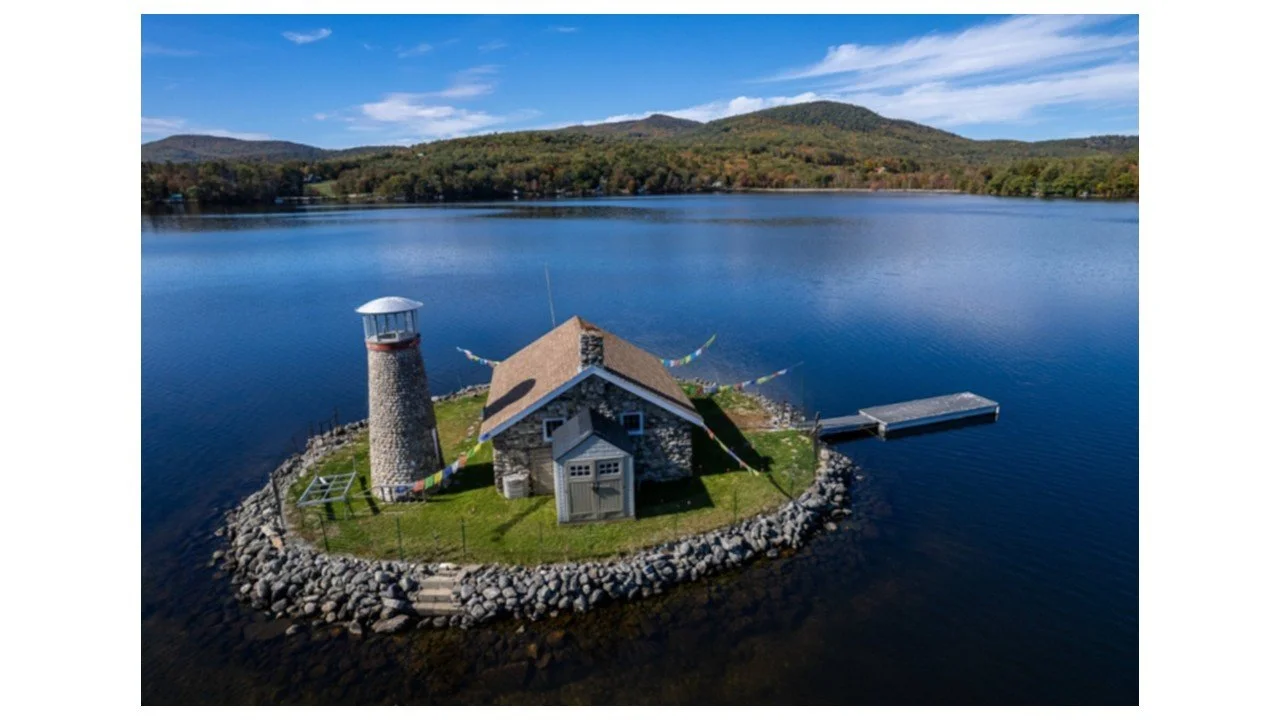
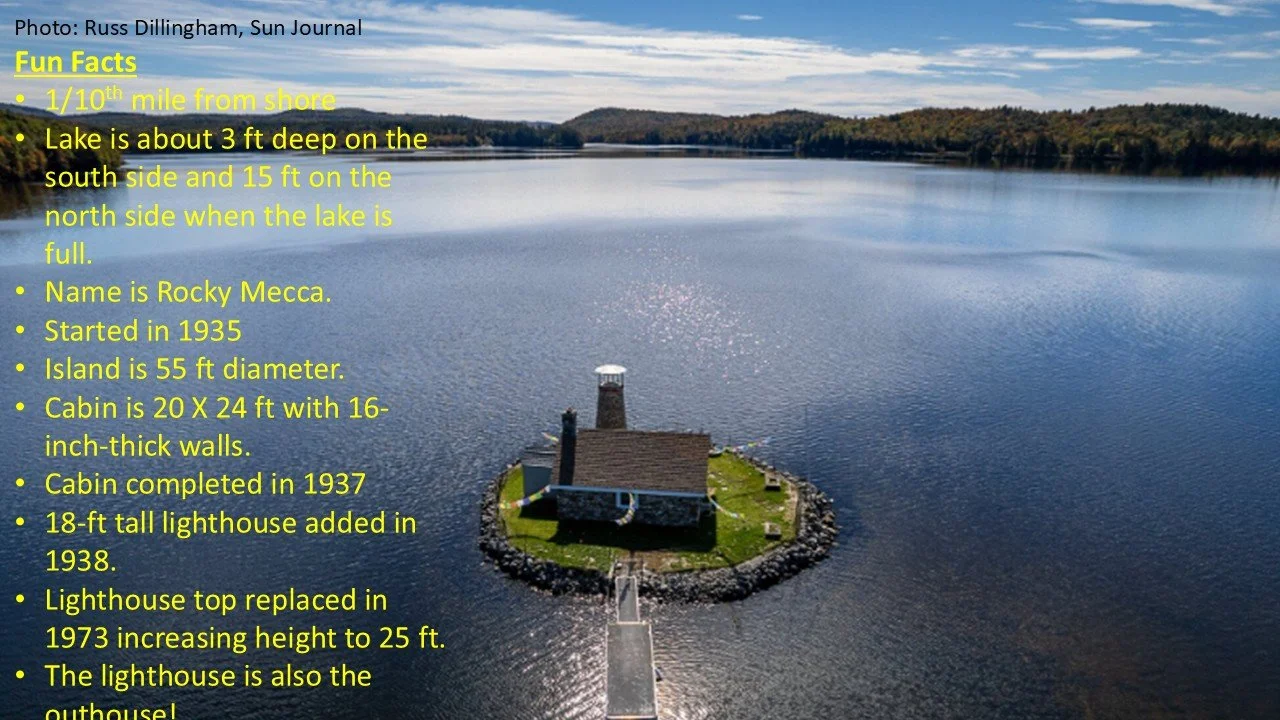
Here is the finished product 84 years later. The floating dock leads to where the old boat slip was. We always used a dock on the east side where the steps can still be seen. The original lighthouse was 18 ft tall.
Originally there was a wind turbine for generating DC electricity. The wind turbin turned out to be very dangerous and difficult to handle in storms and was removed. The stonework at the top of the lighthouse began to crack badly in the 1970s so a new aluminum top was made, rowed out to the island, and hoisted into place. The new top increased the height to 25 ft.
Everything was done by hand. No heavy equipment.
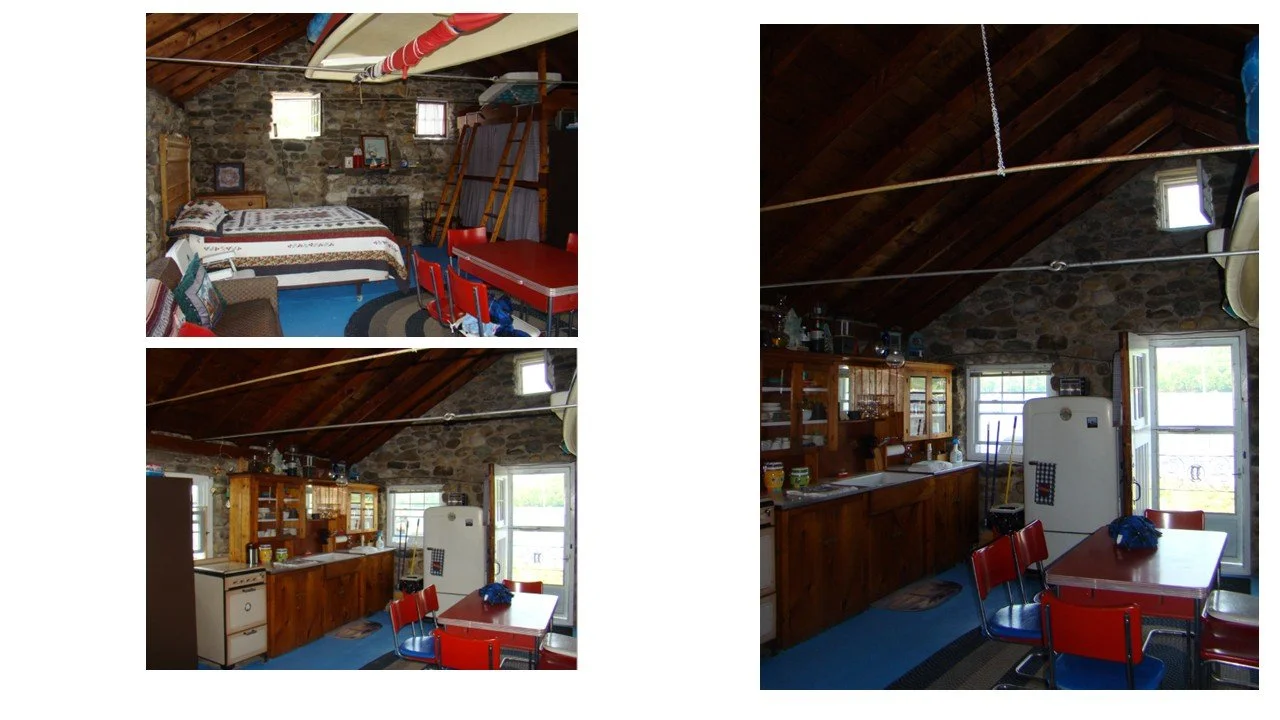
Everyone is familiar with the outside but you may not have seen the inside. These pictures were taken around 2005. The interior is nearly the same as it was when my family vacationed there in the 60’s and 70’s. The top left photo shows the bunks. Originally there was another set of bunkbeds where the Queen size bed is in this picture. Back then the bunkbeds staked three high – falling out of the top bunk to the concrete floor was very painful!
The steel rod keeps the roof from spreading under snow loads. The red vinal chairs and table are the same I believe. The kitchen appliances – stove, refrigerator, and lights -- are all propane and I believe these in the picture are the same as those from the 60s – maybe longer. Water has to hauled out and sewage has to be hauled off.
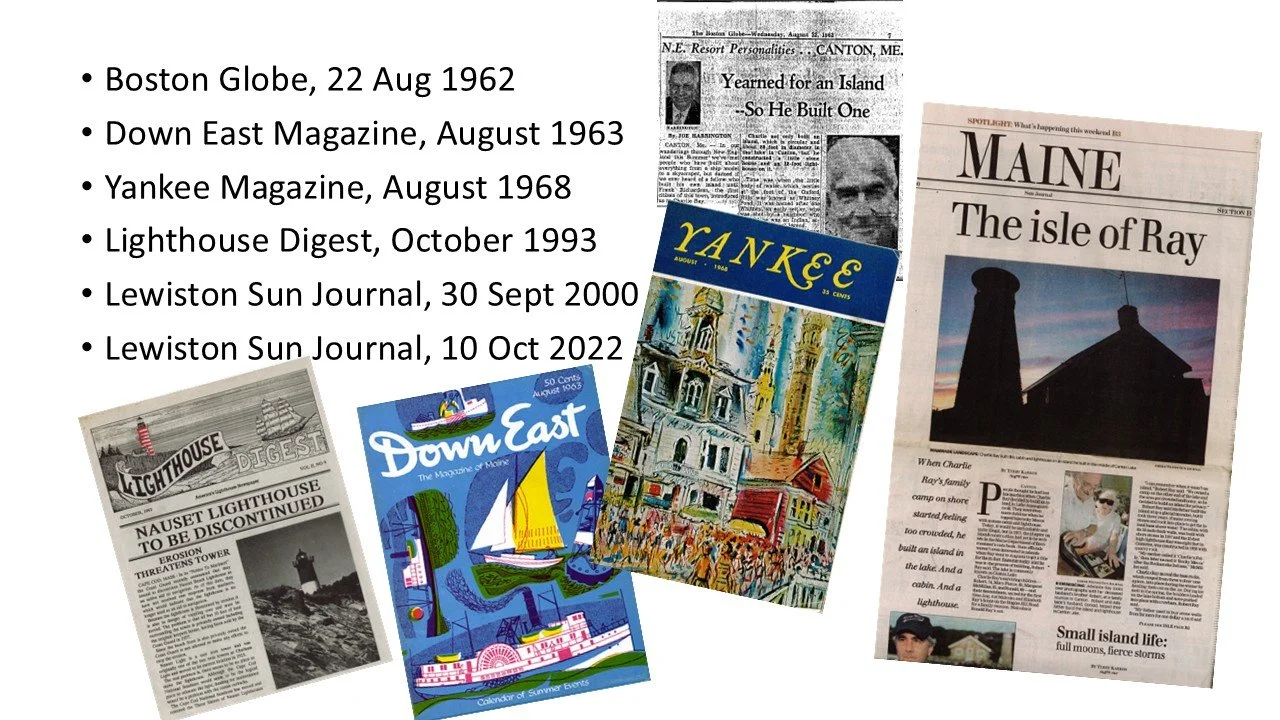
There have been numerous articles written about the island. Probably the most comprehensive article was the 1968 Yankee magazine article by Hope Marston. She was a neighbor of my grandparents and based the article on interviews with Charlie and Hazel.
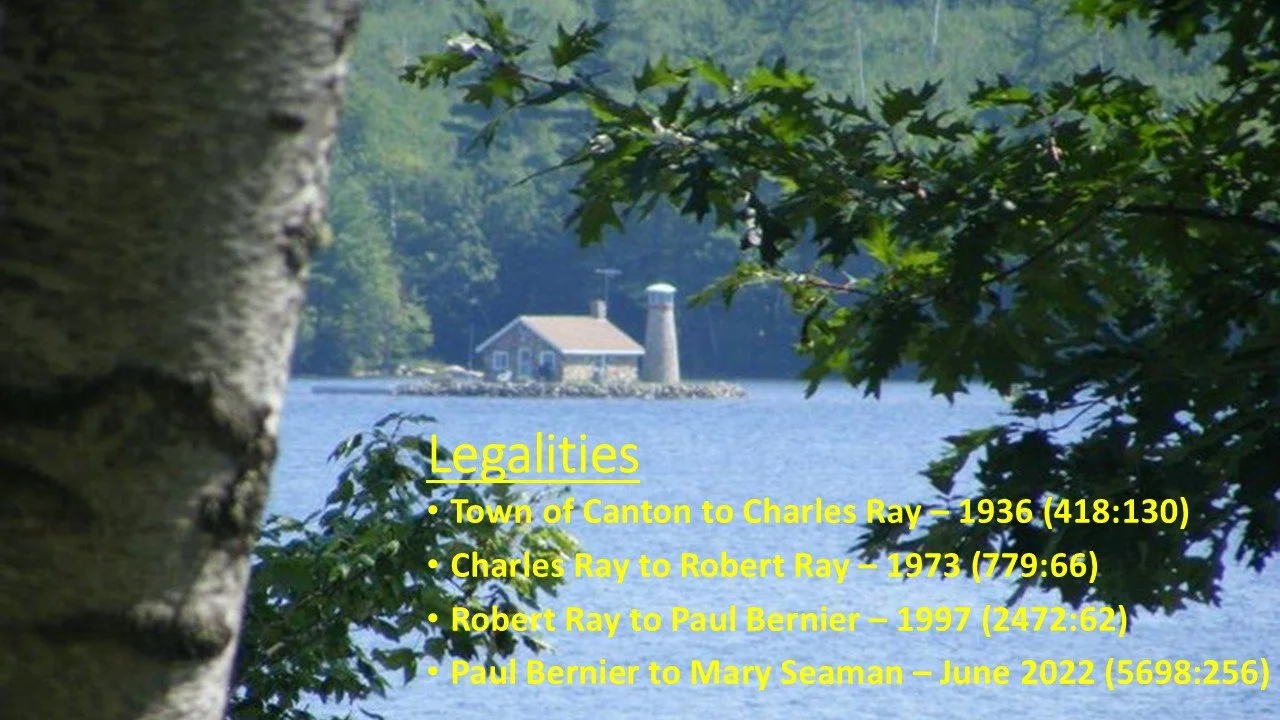
Once the base was complete in 1936, Charlie decided to get legal title to what he had already built. The State was not interested because according to them it wasn’t there. The State owns the bottom of any “great pond.”
The Canton selectmen were much more agreeable especially when Charlie reminded them if he had a deed, they could tax him! The town issued a quit claim deed on 1936. Toward the end of his life Charlie gave the property to his son Robert in 1973. As Robert aged he found it difficult to keep up with the maintenance and use so he sold it to Hartford resident Paul Bernier. The Bernier’s sold the property to Mary Seaman in 2022.